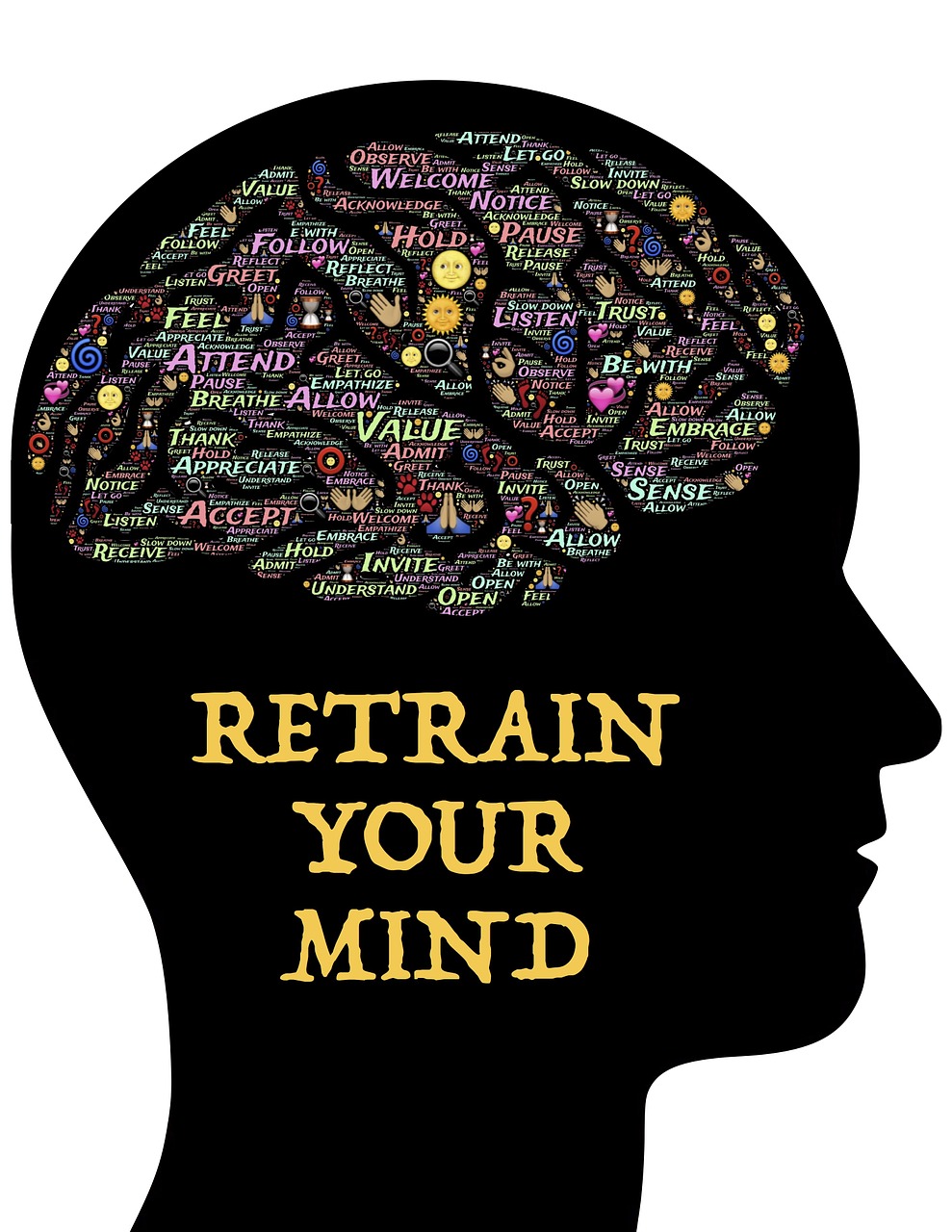
( Part One )
This week, I thought I would continue with the discussion of concentration by extending to you the exercises outlined in Theron Q. Dumont’s book on the power of concentration.
By doing these exercises, you will increase your ability for self-control as well as your ability to concentrate. Please click here if you want to read the book for free. However, if you would like to see Theron Q Dumont’s exercise in his book, please continue reading as I will list ten of the nineteen below this week and the final nine next week.
Exercise 1
Sit in a comfortable chair and see how still you can keep it. This is not as easy as it seems. You will have to center your attention on sitting still. Watch and see that you are not making
any involuntary muscular movements. With a little practice, you will find you can sit still without a movement of the muscles for fifteen minutes. At first, I advise sitting in a relaxed position for five minutes. After you can keep perfectly still, increase the time to ten minutes and then to fifteen. This is as long as it is necessary. But never strain yourself to keep still. You must be relaxed completely. You will find this habit of relaxing is very good.
Exercise 2
Sit in a chair with your head up, your chin out, and your shoulders back. Raise your right arm until it is on the level with your shoulder, pointing to your right. Look around, with the head only,
fix your gaze on your fingers, and keep the arm perfectly still for one minute. Next, do the same exercise with the left arm. When holding the arm perfectly steady, increase the time
until you can do this for five minutes with each arm. Next, turn the palm of the hand downward when it is outstretched, as this is the easiest position. If you keep your eyes fixed on the
tips of your fingers, you can tell if you keep your arm perfectly still.
Exercise 3
Fill a small glass full of water, and grasp it by the fingers; put the arm directly in front of you. Now fix the eyes upon the glass and try to keep the arm so steady that no movement will be
noticeable. Do this first for one moment and then increase it to five. Do the exercise with first one arm and then the other.
Exercise 4
Watch yourself during the day and see that your muscles do not become tense or strained. See how easy and relaxed you can keep yourself. See how poised you can be at all times. Cultivate a self-poised manner instead of a nervous, strained appearance.
This mental feeling will improve your carriage and demeanor. Stop all useless gestures and movements of the body. This means that you have no proper control over your body. After you have acquired this control, notice how “ill-at-ease” people are that have not gained this control, and see how they lack poise.
Get rid of any habit you have of twitching or jerking any part of your body. You will find you make many involuntary movements. You can quickly stop any of these by merely centering your attention on the thought, “I will not.”
If you are in the habit of letting noises upset you, just exercise control; when the door slams or something falls, just think of these as exercises in self-control. You will find many exercises like this in your daily routine.
The above exercises aim to gain control over the involuntary muscular movement, making your actions entirely voluntary. The following exercises are arranged to bring you
voluntary muscles under the control of the will so that your mental forces may control your muscular movements.
Exercise 5
Move your chair up to a table, placing your hands upon it, clenching the fists, keeping the back of the hand on the table, the thumb doubled over the fingers. Now fix your gaze upon the
first for a while, then gradually extend the thumb, keeping your whole attention fixed upon the act, just as if it was a matter of great importance. Then gradually extend your first finger, then
your second, and so on until you open the rest. Then reverse the process, closing first the last one opened and then the rest, and finally, you will have the fist again in the original position
with the thumb closed over the finger. Do this exercise with the left hand. Keep up this exercise with one hand and then the other until you have done it five times with each hand. In a few
days, you can increase it to ten times.
The chances are that the above exercises will at first make you “tired,” but you need to practice these monotonous exercises to train your attention. It also gives you control over your muscular movement. The attention, of course, must be kept closely on each movement of the hand; if it is not, you, of course, lose the value of the exercise.
Exercise 6
Put the right hand on the knee, both fingers and thumb closed, except the first finger, which points out in front of you. Then move the finger slowly from side to side, keeping the attention fixed on the end of the finger. You can make up a variety of exercises like these. It is good training to plan out different ones. The main point you should keep in mind is that the exercise should be
simple and that the attention should be firmly fixed upon the moving part of the body. You will find your attention will not want to be controlled and will try to drift to something more
interesting. This is just where these exercises are of value, and you must control your attention and see it is held in the right place and does not wander away.
You may think these exercises very simple and of no value, but I promise you in a short time, you will notice that you have much better control over your muscular movements, carriage and
demeanor, and you will find that you have greatly improved your power of attention and can center your thoughts on what you do, which, of course, will be very valuable.
No matter what you may be doing, imagine that it is your chief object in life. Imagine you are not interested in anything else in the world but what you are doing. Do not let your attention
get away from the work you are at. Your attention will no doubt be rebellious, but control it and do not let it control you. Once you conquer the rebellious attention, you have achieved a
greater victory than you realize at the time. You will often be thankful you have learned to concentrate your closest attention on the object.
Let no day go by without practicing concentrating on some familiar object that is uninteresting. Never choose an interesting object, as it requires less attention. The less interesting it is, the better exercise it will be. After a little practice, you will find you can center your attention on
uninteresting subjects at will.
The person that can concentrate can gain full control over his body and mind and be the master of his inclinations, not their slave. When you can control yourself, you can control others. You
can develop a Will that will make you a giant compared to the man without Will Power. Try out your Will Power in different ways until you have it under such control that just as soon as
you decide to do a thing, you go ahead and do it. Never be satisfied with the “I did fairly well” spirit, but put forward your best efforts. Be satisfied with nothing else. When you have
gained this, you are the man you were intended to be.
Exercise 7
Concentration Increases the Sense of Smell. Concentrate on the odor of flowers and plants when you take a walk, drive in the country, or pass a flower garden. See how many different kinds you can detect. Then choose one particular kind and try to sense only this. You will find that this strongly intensifies the sense of smell. This differentiation requires, however, a peculiarly attentive attitude. When a sense of smell is being developed, you should not only shut out from the mind every thought but that of odor, but you should also shut out cognizance of every odor save that upon which your mind, for the time, is concentrated.
You call find plenty of opportunities for exercises for developing the sense of smell. When you are out in the air, be on the alert for the different odors. You will find the air laden with all
kinds, but let your concentration upon the one selected be such that a scent of its fragrance in after years will vividly recall the circumstances of this exercise.
The object of these exercises is to develop concentrated attention, and you will find that through their practice, you can control your mind and direct your thoughts just as you can with your arm.
Exercise 8
Concentration on the Within. Lie down and thoroughly relax your muscles. Concentrate on the beating of your heart. Do not pay any attention to anything else. Think how this great organ pumps blood to every part of the body; try to picture the blood leaving the great reservoir and going in one stream right down to the toes. Picture another going down the arms to the tips
of the fingers. After a little practice, you can actually feel the blood passing through your system.
If, at any time, you feel weak in any part of the body, will an extra blood supply go there? For instance, if your eyes feel tired, picture the blood coming from the heart, passing
up through the head and out to the eyes. You can wonderfully increase your strength through this exercise. Men have been able to gain such control over the heart that they have actually stopped it from beating for five minutes. This, however, is not without danger and is not to be practiced by the novice.
I have found the following a very helpful exercise to take just before going to bed and on rising in the morning: Say to yourself, “Every cell in my body thrills with life; every part of
my body is strong and healthy.” I have known a number of people
to improve their health in this way greatly. You become what you picture yourself to be. If your mind thinks of sickness in connection with yourself, you will be sick. The image will be realized if you imagine yourself in strong, vigorous health. You will be healthy.
Exercise 9
Concentrating on Sleep. What is known as the water method is, although very simple, very effective in inducing sleep.
Put a full glass of clear water on a table in your sleeping room. Sit in a chair beside the table, gaze into the glass of water, and think how calm it is. Then picture yourself getting into
just as calm a state. In a short time, you will find the nerves becoming quiet, and you can go to sleep. Sometimes it is good to picture yourself becoming drowsy to induce sleep. Again, the most persistent insomnia has been overcome by one thinking of himself as some inanimate object–for instance, a hollow log in the depths of the cool, quiet forest.
Those who are troubled with insomnia will find these sleep exercises that quiet the nerves very effective. Just keep the idea in your mind that there is no difficulty in going to sleep; banish all fear of insomnia. Practice these exercises, and you will sleep.
By this time, you should have awakened to the possibilities of concentration and become aware of its important part in your life.
Exercise 10
Concentration Will Save Energy and Appearance. Watch yourself and see if you are not in the habit of moving your hands, thumping something with your fingers, or twirling your mustache. Some have the habit of keeping their feet going, for instance, tapping them on the floor. Practice standing before a mirror and see if you are in the habit of frowning or causing wrinkles to appear on the forehead. Watch others and see how they needlessly twist their faces in talking. Any movement of the face that causes the skin to wrinkle will eventually cause a permanent wrinkle. As the face is like a piece of silk, you can make a fold in it a number
of times, and it will straighten out of itself, but if you continue to make a fold in it, it will, in time, be impossible to remove it.
By Concentration, You Can Stop the Worry Habit. If you are in the habit of worrying over the merest trifles, just concentrate on this for a few minutes and see how needless it is; if you are also in the habit of becoming irritable or nervous at the least little thing, check yourself instantly when you feel yourself becoming so; start to breathe deeply; say, “I will not be so weak; I am master of myself,” and you will quickly overcome your condition.
Final Thoughts:
Now that these ten exercises are outlined, I hope you will try them. See for yourself the kind of results that they can provide.
Along this journey, to become positively improved, we need to acquire the proper tools to find our success. I encourage you to make this one of the many tools I will help you quire for your journey.
As always, I would love to read your thoughts and ideas in the comment section below. Until next week, Namaste.

Leave a Reply