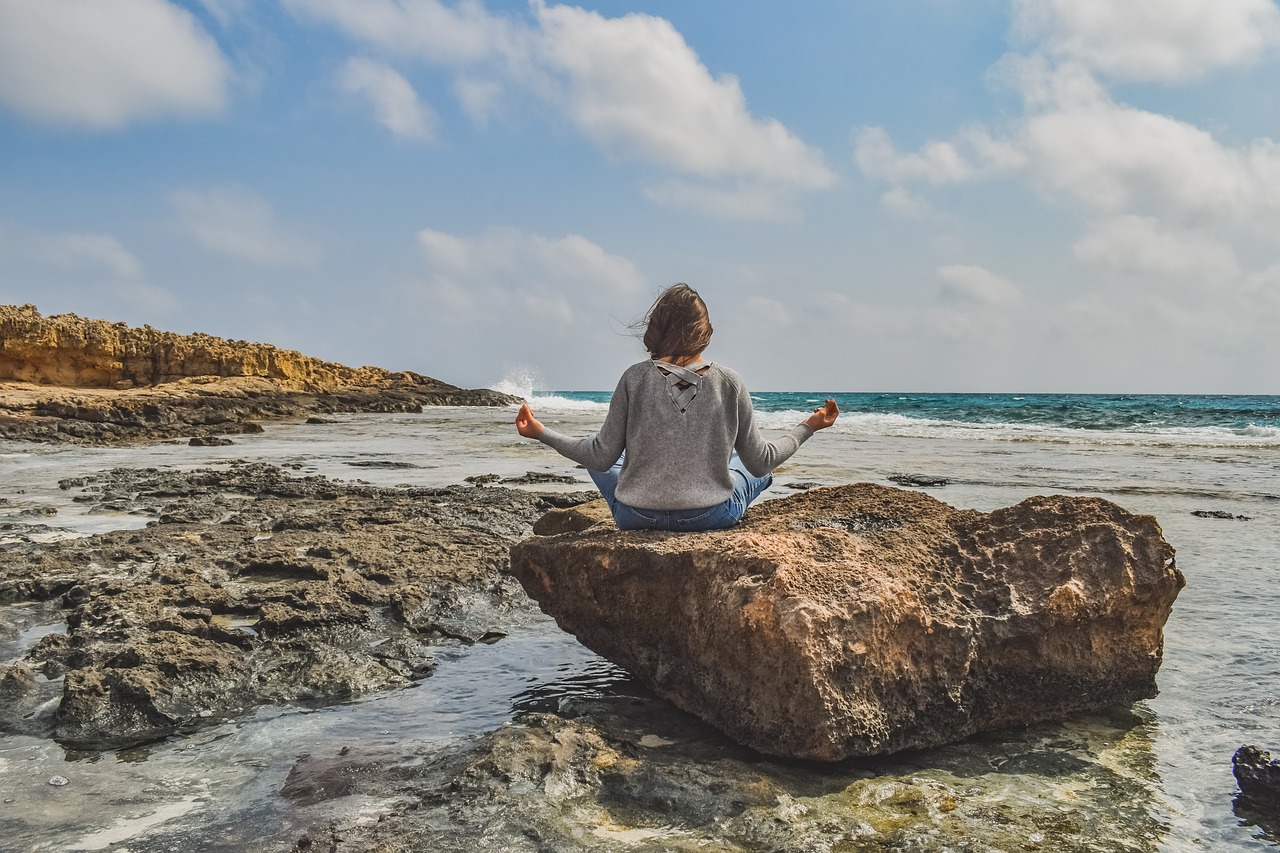
Welcome back, everyone. This week I would like to discuss the difference between concentration and meditation when in a state of mindfulness. Although most people would not see any difference between these two states when in a state of mindfulness, it is essential to understand that there is, in fact, a difference.
In this week’s newsletter, I want to show you the difference in the hope of improving your practice and overall experience when practicing mindfulness. Remember, practicing mindfulness correctly will lead to new insights and, ultimately, enlightenment or a higher state of consciousness.
Whether you practice mindfulness for clarity or enlightenment, a higher state of consciousness is always the result you seek. So let me show you how to tweak your practice to align it to a higher level of success.
As I am ready to dive into this information, I invite you to take this next step toward becoming positively improved.
Meditation and concentration defined.
Let me first take a moment to define the definition of both meditation and concentration.
- Meditation – to engage in a mental exercise ( such as concentration on ones breathing) to reach a higher state of spiritual awareness.
- Concentration – The power of focusing one’s attention or mental effort.
Now if you look at these definitions to the naked eye, they look like they would be the same thing. So now, let’s dive deeper into our understanding of both to see how they differ.
A deeper understanding of consciousness.
Now, if concentration is the power of focusing your attention, then you would also have to take in the understanding that concentration is also a narrowing of the mind. You are, in fact, limiting your mind to only think about that one particular thing or person.
This can be good if you want to see your situation clearly. And it is important to always clearly see a situation’s details. Still, concentration does not lend itself to resolving the issues or situations; it only allows you to see the problem.
See, when we concentrate, we are, in effect, building a wall of resistance in order to keep all other thoughts out. Thus, concentration can be the best of friends if you seek productivity. However, if you seek understanding, enlightenment, or resolution, concentration can not help you beyond seeing the problem you face.
Now let’s dive a little deeper into our understanding of meditation and see how it may or may not help us when we are in a state of mindfulness.
A deeper understanding of meditation.
Now recapping the definition of meditation as a mental concentration that allows one to reach a higher spiritual awareness. You might be asking how it is different. If you take a step back and examine what meditation’s purpose is, you will see that meditation is, in fact, the exact opposite of concentration.
See, concentration, as we have now established, blocks thoughts out, whereas meditation is saying yes to the flow of thoughts and ideas. This flow of thoughts brings new insight and perspective; through this new insight and perspective, we will reach a higher state of consciousness or enlightenment.
Thus, meditation can be the best of friends when it comes to resolving problems or finding your way back to a state of peace and harmony. Provided you have a complete understanding to practice meditation properly, you can not restrict the flow of thought but instead, become selective about what thought you attach yourself to and allow all others to flow through.
Now that we have a better understanding of the difference between concentration and meditation; let’s look at the steps we can take to improve the practice of enlightenment through mindfulness.
How one reaches enlightenment through mindfulness
Now if you take a step back and look at how one gets to enlightenment, you will find that enlightenment is reached by a state of calmness, the alignment of oneself to their intuition, and a spiritual connection to the invisible world. This will allow this individual to become aware of their ability for compassion and seeing all of life through the lens of love and kindness.
Becoming awakened to the invisible world and connecting to a divine source can only be done when you allow for a flow and the natural course and unfolding of all things. This means you must let go of your ego or ideas of control or power over anyone or thing.
When you come to a place where you have an open heart, have a released ego, and can follow your divine wisdom or your intuition along with a continuous state of gratitude, inner peace, and harmony. Then you have reached the level of consciousness that will allow enlightenment flow.
Only when you reach this state of consciousness will you be shown the best direction to go or become clear as to what steps should be taken. This will happen as if a light bulb is going on in your head or some unknown source has placed a thought in your head, and at that moment, you just know. When this occurs, have no doubt you are connected to the invisible world and the divine source.
Final Thoughts:
Hopefully, you can now see the difference between concentration and meditation and what you can do to improve your practice to take your mindfulness to the next level. As always, I hope you found this information useful.
If you know anyone who would benefit from this newsletter or any of the information I share, I invite you to share it with them. Also, if you would like to share thoughts of your own on this topic, please do so in the comment section below.
Thank you for taking the time to read this week’s newsletter and for taking this next step with me along the journey toward becoming positively improved. Until next week, namaste.

Leave a Reply